
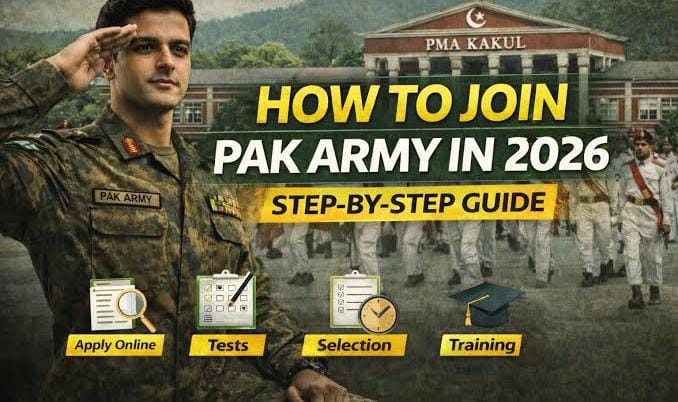
Every year, thousands of young Pakistanis apply to join the Pakistan Army as commissioned officers. The journey is competitive, challenging, and emotionally demanding. Many candidates feel confused about where to start and how to prepare properly.
In this detailed ISSB 2026 Preparation Guide Pakistan, you will learn:
- Complete selection process
- Initial testing breakdown
- ISSB 5-day assessment explained
- Common mistakes to avoid
- A motivational success story from rejection to recommendation
If you are planning to apply in 2026, this personal experience guide will help you prepare with clarity and confidence.
Understanding the Pakistan Army Selection Process 2026
The officer as 2nd lieutenant selection process has two major stages:
- Initial Testing (Preliminary Selection)
- ISSB 5-Day Assessment
Both stages evaluate different qualities. I saw Many candidates prepare only for physical fitness but forget personality development, which is equally important.
A motivational success story from rejection to recommendation
If you are planning to apply in 2026, this guide will help you prepare with clarity and confidence.
Understanding the Pakistan Army Selection Process 2026
The officer selection process has two major stages:
- Initial Testing (Preliminary Selection)
- ISSB 5-Day Assessment
Both stages evaluate different qualities. Many candidates prepare only for physical fitness but forget personality development, which is equally important.
Stage 1: Initial Testing – Preliminary Selection
This stage is conducted at Army Selection & Recruitment Centers (ASRCs). It filters candidates before they are recommended for ISSB.
- Intelligence Test (Computer-Based)
This includes:
- Verbal reasoning
- Non-verbal reasoning
- Logical patterns
- Series completion
- Analytical questions
Time management is extremely important. Questions are not very difficult, but speed and focus decide your result.
Tip for ISSB 2026 applicants:
Practice daily timed intelligence tests. Avoid guessing randomly.
- Academic Test
Subjects vary depending on entry type but usually include:
- English
- Mathematics
- Physics or General Knowledge
Basic conceptual understanding is enough. Focus on:
- Grammar
- Basic algebra
- Percentages
- Everyday science
Avoid over-preparing advanced topics unnecessarily that will use more time.
3.Physical Test Requirements 2026
Physical fitness is mandatory.
Standard requirements include:
- 1.6 km run within required time that is 8mins
- Push-ups 10
- Sit-ups 15
- Chin-ups 3
- Ditch crossing
Physical strength builds mental confidence. Many candidates fail not because they are weak, but because they panic under pressure.
Start preparation at least 6–8 weeks before applying.
4.Initial Interview
The initial interview checks:
- Communication skills
- Confidence level
- Motivation
- Background awareness
Common questions:
- Why do you want to join the Army?
- Tell us about your family.
- What are your strengths and weaknesses?
Be honest. Avoid memorized answers. Interviewers quickly identify artificial responses.
Stage 2: ISSB – 5 Day Personality Assessment
The Inter Services Selection Board (ISSB) conducts a five-day assessment designed to evaluate personality and leadership potential.
ISSB is not about intelligence alone. It evaluates:
- Leadership
- Emotional stability
- Teamwork
- Decision-making
- Initiative
- Confidence
Day 1: Screening Tests
Includes:
- Intelligence test
- Picture story writing
- Group discussion
Speak clearly and confidently. Participate actively but respectfully.
Day 2: Psychological Tests
These tests reveal your natural personality traits.
Includes:
- Word Association Test (WAT)
- Sentence Completion Test
- Thematic Apperception Test (TAT)
- Self-description
Most candidates make one big mistake: trying to act perfect.
Best advice:
Be natural. Show positivity, responsibility, and realistic thinking.
Day 3 & 4: GTO Tasks
Group Testing Officer (GTO) tasks are practical leadership assessments.
Activities include:
- Group discussions
- Planning exercises
- Command tasks
- Obstacle tasks
- Lecturette
Important lesson:
Leadership does not mean shouting or dominating. It means guiding the team calmly.
Balanced behavior is the key.
Interview Day
The personal interview is one of the most important parts.
The interviewer checks:
- Awareness
- Confidence
- Emotional maturity
- Consistency between psychological answers and spoken answers
If you were previously rejected, admit it honestly and explain how you improved.
A Real Success Story – From Rejection to Recommendation
Here is the real life experience of a selected candidate named Bilal now serving as a captain in pak army after getting recommended in PMA long course 143.
Like many young boys in Pakistan, he dreamed of wearing the Army uniform. He wanted to serve his country with pride. But his journey was not easy. He faced rejection, criticism, and self-doubt before finally achieving his goal.
This post combines his story with a complete guide for new applicants who want to understand the selection process clearly.
There are two major stages in becoming an officer.
Stage 1: Initial Testing
The first step takes place at Army Selection and Recruitment Centers.
It begins with an intelligence test conducted on a computer. This test includes verbal and non-verbal questions. Time is limited, so speed and accuracy matter a lot.
After that comes the academic test. Depending on qualification, it usually includes English, Mathematics, Physics, or General Knowledge. Candidates with clear basic concepts find this manageable.
Then comes the physical test. It includes a 1.6 km run, push-ups, sit-ups, chin-ups, and ditch crossing. Many candidates underestimate this part, but physical fitness plays an important role in overall confidence.

Finally, there is a short initial interview where basic questions are asked about family background, education, and motivation to join the Army.
In his first attempt, Bilal cleared all of these stages successfully. He felt proud and hopeful. His real challenge, however, was still ahead.
Stage 2: ISSB (Five Days Assessment)
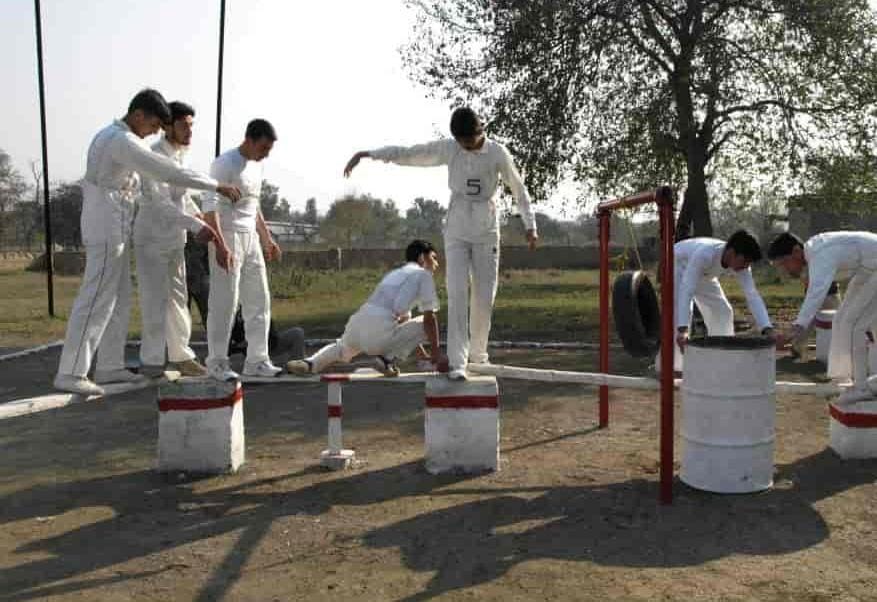
The second and most important stage is conducted by the Inter Services Selection Board. These five days are designed to evaluate personality, leadership qualities, confidence, emotional stability, and teamwork.
During his first ISSB attempt, Bilal was excited but internally nervous.
On the first day, he cleared the screening tests. On the second day, psychological tests were conducted. Here, he made his first mistake. Instead of being natural, he tried to write what he thought the assessors wanted to see.
On the third and fourth days, group tasks and leadership exercises were conducted. He hesitated. He waited for others to take initiative. He doubted himself. During the interview, he overthought his answers and lacked confidence.
After the conference day, he returned home with hope. A few weeks later, the letter arrived.
It said he was not recommended.
That moment hurt deeply.
Facing Criticism and Self-Doubt
Soon, comments started coming from relatives and people around him.
Some said selection requires reference. Others said that without background, it is nearly impossible. Slowly, he began to believe these things. He felt maybe he failed because he did not have influence.
He was disappointed and emotionally disturbed.
But his parents did not let him give up. His father reminded him that if reference was everything, then merit would have no meaning. His mother encouraged him to try again with stronger preparation.
Their support changed his mindset.
Preparing for the Second Attempt
Bilal decided to apply again.
This time, he passed the initial tests with ease because he was better prepared physically and mentally.
While waiting for the ISSB call letter, he joined a local academy to improve his communication skills and confidence. He practiced group discussions, worked on leadership behavior, improved his physical stamina, and most importantly, worked on his mindset.
When his ISSB letter arrived for the second attempt, he was not the same person as before.
A Different Approach at ISSB
In his second attempt, his confidence was visible even in the way he walked into the center. He was calm and composed.
During the five days, he focused on being natural.
When leadership was required, he stepped forward.
When teamwork was required, he supported others.
When instructions were given, he followed them responsibly.
He did not try to dominate or impress. He simply tried to be balanced.
During the interview, he openly discussed his previous failure and what he had learned from it. This time, he spoke with clarity and confidence.
Waiting for the Result
After the conference day, he returned home once again. He prepared himself mentally for both outcomes. He knew he had improved, but he also understood that selection was competitive.
When the letter finally arrived, he opened it with nervous hands.
This time, it said he was recommended.
He could not control his emotions. He remembered the rejection, the criticism, the doubts, and the months of hard work. The journey from rejection to recommendation changed him completely.
Years later, through dedication and service, he proudly earned the rank of Captain in the Pakistan Army.
Lessons for New Applicants
Bilal’s story proves that selection does not depend on reference or family background. It depends on personality, preparation, and self-belief.
If you are preparing for ISSB:
Start physical training early.
Work on your communication skills.
Be natural in psychological tests.
Take initiative in group tasks but respect teamwork.
Accept failure as feedback, not as the end.
Most importantly, never let one rejection define your future.
A middle-class candidate with no influence can succeed. The real reference is character, confidence, and continuous self-improvement.
Sometimes rejection is not a closed door. It is preparation for a stronger comeback.
For more jobs and news information you can visit